“These repositories are one product.”
A standing group of repositories, whatever branch each one is on. See what's new and what's uncommitted across all of them at once.
 Rarely Impossible

GitWorkStream
Read-only git window · Mac
A read-only window onto every repository you work in. The branches being created, the commits being made and what's still uncommitted, including the work AI coding agents do while you're elsewhere.
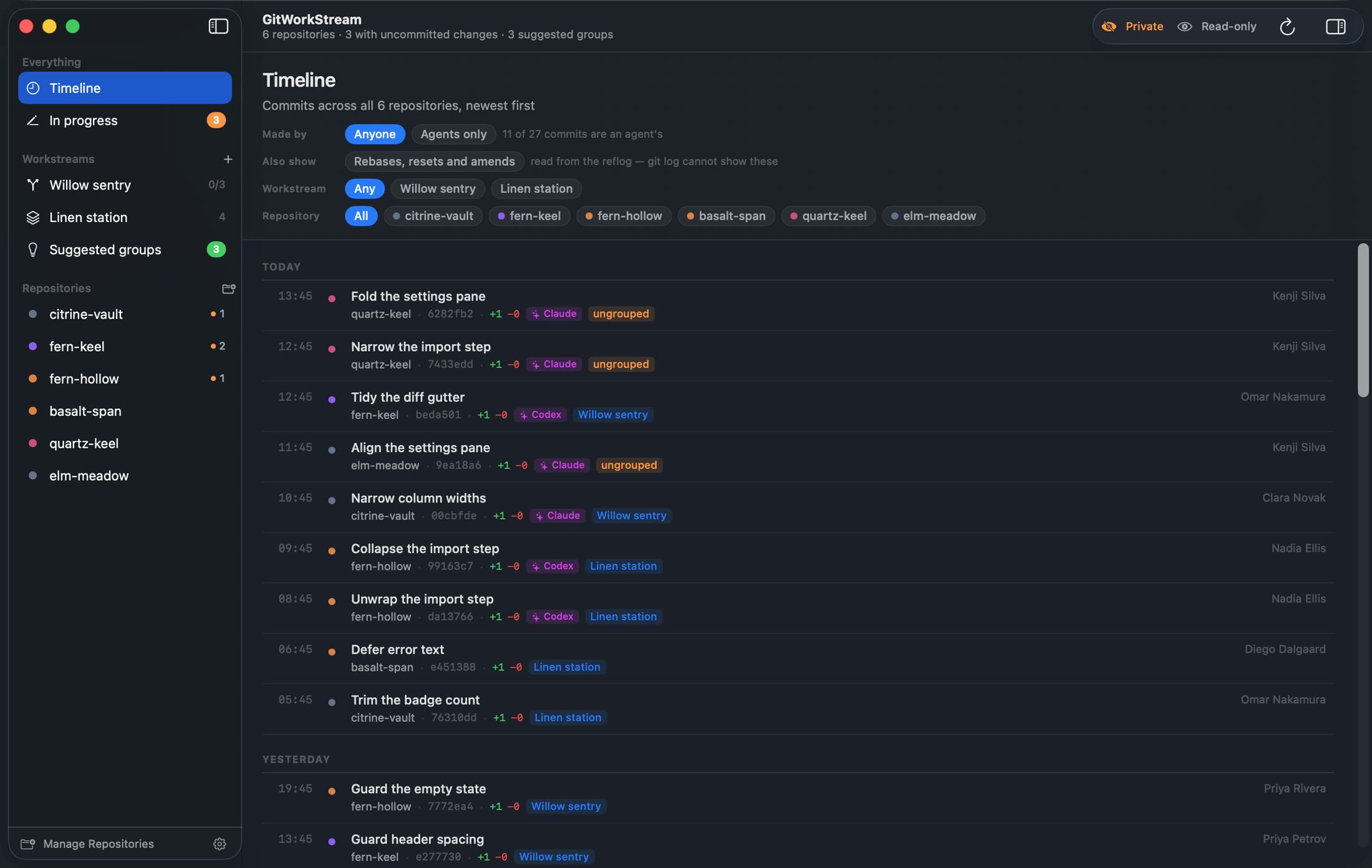
Screenshots taken in private mode, with stand-in names.
The problem
You hand a task to an agent, go to a meeting, and come back to new branches, a dozen commits and half-finished changes spread across your checkouts. Finding out what happened means a terminal per repository and a lot of git log.
GitWorkStream puts it all in one window. It reads git and nothing else, so it works with any agent, any editor and any host, and it never gets in the way of the work.
While you're away
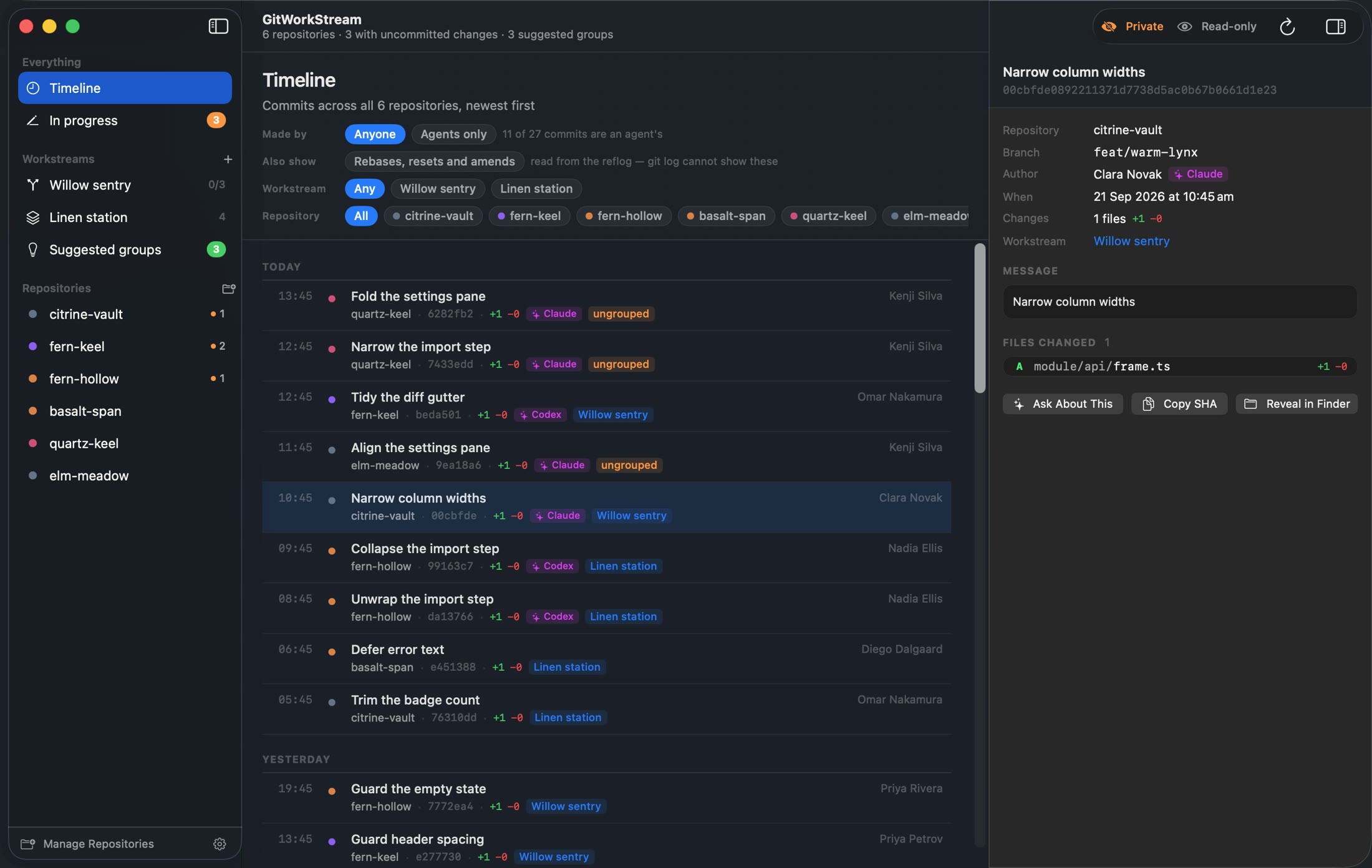
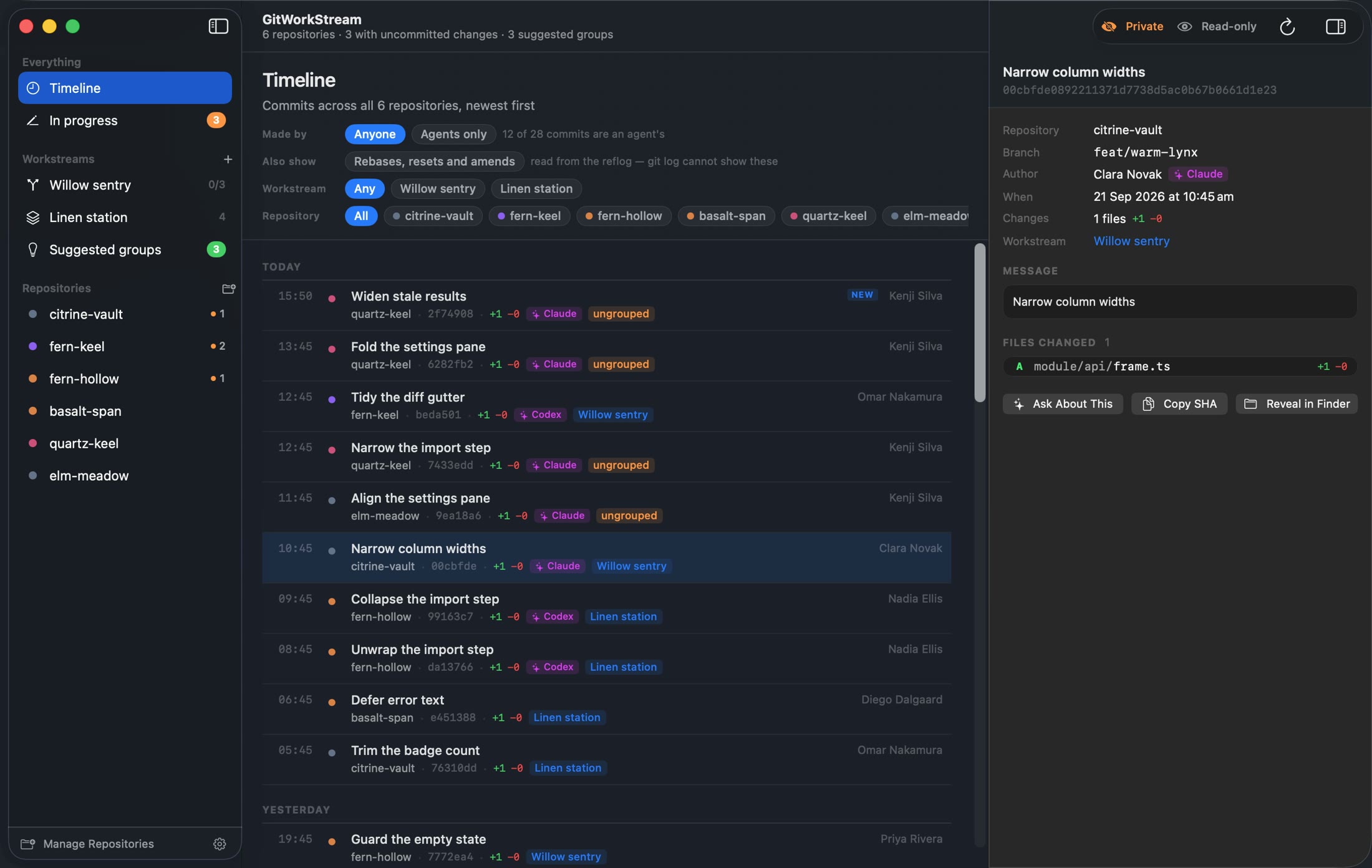
Your folders are watched, so a commit an agent makes shows up in the Timeline on its own, badged with the agent and marked NEW since your last look. It works from the files on your Mac, not a server.
How it knows
Agents leave traces in the commits themselves. GitWorkStream checks three, in order. It doesn't read agent logs or any agent's own data.
Co-authored-by: Claude <…>name <email>claude/…The tour
Every commit across every repository, newest first. Filter by workstream or repository, and show rebases, resets and amends read from the reflog.
Workstreams
When one piece of work spans several repositories, give it a name. GitWorkStream proposes groupings for you, and you decide.
A standing group of repositories, whatever branch each one is on. See what's new and what's uncommitted across all of them at once.
Adds a landing order, a ready or blocked state per repository, the branches not pushed yet, and a combined diff you can review in one pass.
Optional · Ask About This
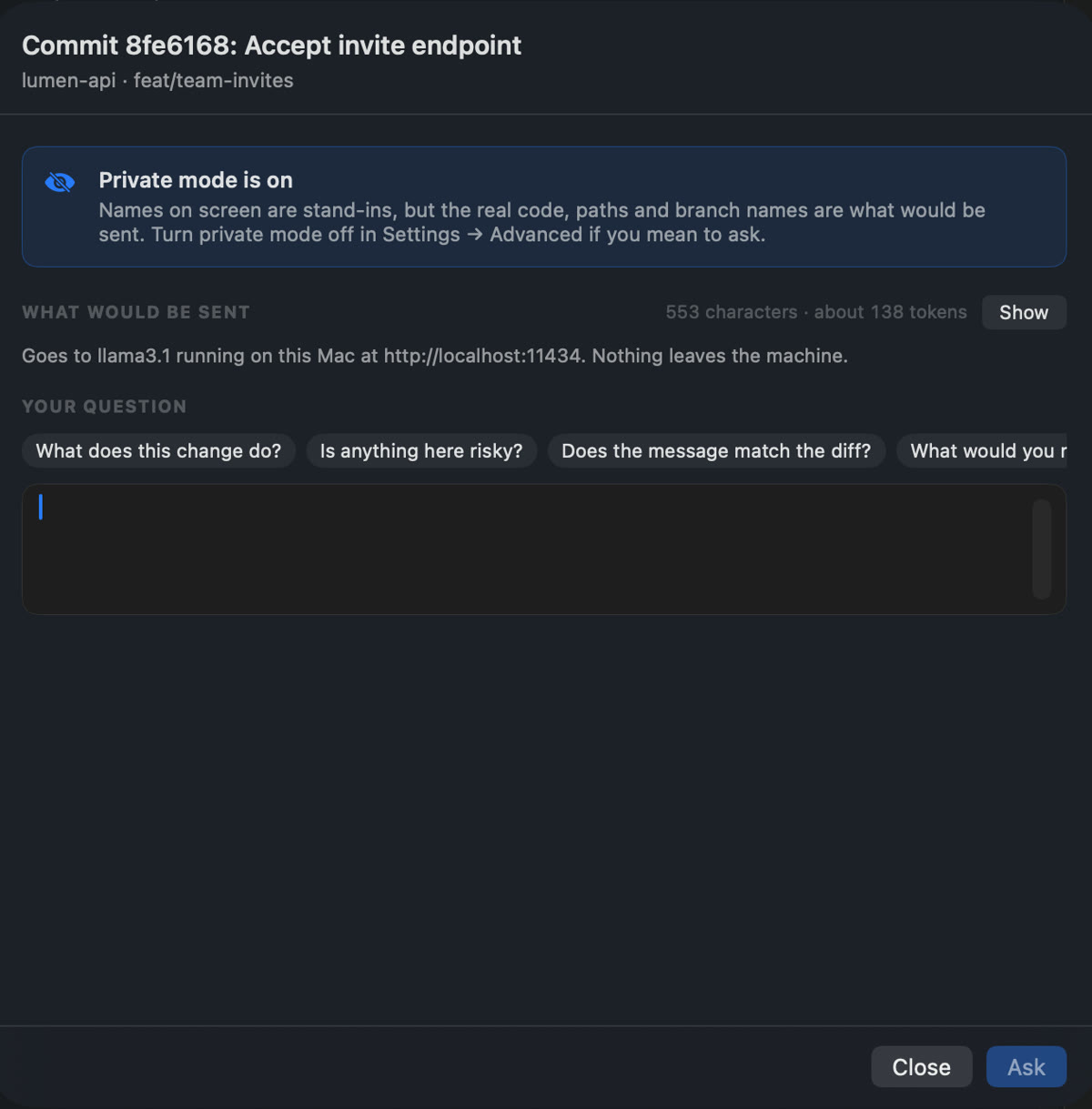
Select a commit or a workstream and ask a question about it, using the model you already have: Anthropic, OpenAI, Ollama running on your Mac, or any OpenAI-compatible endpoint.
The film
Read-only by design
No push, pull, fetch, merge, commit or stage. Safe to leave open while agents work in the same checkouts.
--no-optional-locks and never fetches, so reading doesn't get in the way of an agent committing.$ ls store.json # folders, repos, workstreams store.backup.json # an automatic backup snapshots/ # the last 12 setups # …and inside your repositories? # nothing. GitWorkStream only reads.
Support
Something not working, or an idea? Email [email protected] with your macOS version. Replies usually within two working days.
No. It never pushes, pulls, fetches, merges, commits or stages, and it stores nothing inside your repositories. It runs git with --no-optional-locks, so it doesn't take the optional locks that could trip up an agent committing at the same time. Safe to leave open while agents work.
From git alone. It looks for a Co-authored-by trailer first, then the author's name or email, then the branch prefix, such as claude/. It recognises Claude, Codex, Copilot, Cursor, Aider, Devin and generic bots. It doesn't read agent logs or any agent's own data.
No. There's no account and no sign-in. It reads the repositories on your Mac with the git already installed, and never talks to GitHub, GitLab or any other git host. An API key is only needed if you choose to use Ask About This with a hosted model.
Not unless you set up Ask About This and press Ask. Then the commit or workstream details shown in the sheet go to the provider you chose. With Ollama on your Mac, nothing leaves the machine. There's no telemetry, analytics or crash reporting. The privacy policy has the detail.
A switch in Settings › Advanced that swaps repository, branch, commit, author and path names on screen for stable stand-ins, so you can take screenshots or share your screen. A Private marker shows in the toolbar, and Ask About This is blocked while it's on. Every screenshot on this page was taken in private mode.
A project is a standing group of repositories, whatever branch each one is on. A change set follows one shared branch across repositories, and adds a landing order, a ready or blocked state per repository, unpushed branches and a combined diff you can review in one pass.
That repository's own git settings name a program for git to run, such as a filter or diff driver. GitWorkStream won't run git there until you trust exactly those settings. This protects you from repositories you didn't set up yourself.
In ~/Library/Application Support/GitWorkStream/ on your Mac: your root folders, repositories and workstreams, a backup, and the last 12 snapshots of your setup, which you can restore from Settings.
Macs with Apple silicon running macOS 14 or later. It's coming soon. Email [email protected] and we'll tell you when it's out.